
TheSpacewriter

  • About TheSpacewriter
  • Voice-overs, Videos, and ‘Casts
  • 365 Days of Astronomy!
  • The Spacewriter’s Store
  • Blog


These pages chronicle the work and ruminations of Carolyn Collins Petersen, also known as TheSpacewriter.

qrcode

I am CEO of Loch Ness Productions. I am also a producer for Astrocast.TV, an online magazine about astronomy and space science.

For the past few years, I've also been a voice actor, appearing in a variety of productions. You can see and hear samples of my work by clicking on the "Voice-Overs, Videos and 'Casts tab.

My blog, TheSpacewriter's Ramblings, is about astronomy, space science, and other sciences.


Ideas and opinions expressed here do not represent those of my employer or of any other organization to which I am affiliated. They're mine.

 Subscribe in a reader

Visit my main site at: TheSpacewriter.com.

**Comments are welcome; I do moderate them to weed out spam.

Contact me for writing and voice-over projects at: cc(dot)petersen(at)gmail(dot)com

I Twitter as Spacewriter

Blog entry posting times are U.S. Mountain Time (GMT-6:00) All postings Copyright 2003-2011 C.C. Petersen

Find online and local Astronomy
Astronomy | Add your site

Spacewriter’s Recent Posts

  • A UFO? A Plane? What is It?
  • Planet Viewing
  • Double Your Viewing
  • Super Moon? Super What?
  • Sic Venus Transit Solis
  • Hurray, Hurray, the First of May
  • Dwarfs in the Cosmos

Archives

  • ► 2012 (28)
    • May 2012
    • April 2012
    • March 2012
    • February 2012
    • January 2012
  • ► 2011 (107)
    • December 2011
    • November 2011
    • October 2011
    • September 2011
    • August 2011
    • July 2011
    • June 2011
    • May 2011
    • April 2011
    • March 2011
    • February 2011
    • January 2011
  • ► 2010 (95)
    • December 2010
    • November 2010
    • October 2010
    • September 2010
    • August 2010
    • July 2010
    • June 2010
    • May 2010
    • April 2010
    • March 2010
    • February 2010
    • January 2010
  • ► 2009 (225)
    • December 2009
    • November 2009
    • October 2009
    • September 2009
    • August 2009
    • July 2009
    • June 2009
    • May 2009
    • April 2009
    • March 2009
    • February 2009
    • January 2009
  • ► 2008 (291)
    • December 2008
    • November 2008
    • October 2008
    • September 2008
    • August 2008
    • July 2008
    • June 2008
    • May 2008
    • April 2008
    • March 2008
    • February 2008
    • January 2008
  • ► 2007 (114)
    • December 2007
    • November 2007
    • October 2007
    • September 2007
    • August 2007
    • July 2007
    • June 2007
    • May 2007
    • April 2007
    • March 2007
    • February 2007
    • January 2007
  • ► 2006 (72)
    • December 2006
    • November 2006
    • October 2006
    • September 2006
    • August 2006
    • July 2006
    • June 2006
    • May 2006
    • April 2006
    • February 2006
    • January 2006
  • ► 2005 (56)
    • December 2005
    • November 2005
    • October 2005
    • September 2005
    • August 2005
    • July 2005
    • June 2005
    • May 2005
    • April 2005
    • March 2005
    • February 2005
    • January 2005
  • ► 2004 (96)
    • December 2004
    • November 2004
    • October 2004
    • September 2004
    • August 2004
    • July 2004
    • June 2004
    • May 2004
    • April 2004
    • February 2004
    • January 2004
  • ► 2003 (74)
    • December 2003
    • November 2003
    • October 2003
    • September 2003
    • August 2003
    • July 2003
    • May 2003
    • April 2003
    • March 2003
    • January 2003
  • ► 2002 (21)
    • November 2002
    • October 2002
    • August 2002
    • June 2002
    • March 2002
    • February 2002

Calendar

February 2011
S M T W T F S
« Jan   Mar »
 12345
6789101112
13141516171819
20212223242526
2728  


Add to Google


Like space music?

Check out my favorite space music artist: Geodesium at Geodesium.com


Blogroll

  • 21st Century Waves - Technology Booms and Human Expansion Into the Cosmos
  • About.Com Space/Astronomy
  • Adot’s NotBlog
  • Astroengine.com
  • Astronomy Blog
  • Astronomy Cast
  • Badastronomy.Com
  • Blooloop
  • BLooloop: CCP
  • Captain Disillusion
  • ChandraBlog - Chandra X-ray Telescope
  • Cosmic Log
  • Cosmic Mirror
  • Cosmic Variance
  • Cosmos4u
  • Discovery Space
  • DP’s Astronomy Blog
  • EurekAlert
  • European Southern Observatory
  • Friends of the Griffith Observatory
  • Gemini Observatory
  • Griffith Observatory
  • Hairy Museum of Natural History
  • Hubble Space Telescope
  • Kids Directory
  • Loch Ness Productions - Cosmic content
  • Mike Brown’s Planets
  • MIT/Haystack Observatory
  • MWA Vodcast
  • NASA Climate Change
  • National Public Radio
  • Observing the Sky
  • One Astronomer’s Noise
  • Pharyngula
  • Prince of Pithy
  • Science Made Cool
  • Significant Snail
  • Solar System Watch
  • Space Times News
  • Space Weather FX Vodcasts
  • Star Stryder
  • Stop Unethical Recission
  • String Theory
  • The Daily Galaxy
  • The Mathroom (possibly NSFW)
  • The Meridiani Journal
  • The Planetary Society Blog
  • The Way Things Break
  • TheCrotchetyoldfan
  • Truth
  • Understanding Science
  • Universe Today

Other blogs that link to me.


Listed on BlogShares

The Carnival of Space #185


February 19, 2011 at 13:00 pm | 6 Comments

Welcome to this week’s Carnival of Space

And, welcome to my humble blog.  This week, my science-writer colleagues and I have multiple servings of tasty cosmic carnival fare for your delectation and intellectual curiosity. So, grab a brass ring, a refreshing beverage (more on that in a minute), and let’s get started down the space midway!

First into the center ring is Astropixie, with an a look at Determining Redshifts, a quick peek at how astronomers figure out just how far away things are in the universe. Amanda Bauer takes you step-by-step through the ways that astronomers determine distances in the cosmos.

Life in a Martian meteorite? Jury's still out on this one, but it begs the question about life's precursors. Courtesy NASA.

Next, the folks at Cheap Astronomy from Canberra, Australia, weigh in with a pair of podcasts about alien biology The first talks about the role that water plays in the formation and sustenance of life. The second makes the case for carbon as the basis for life, particularly on our planet. If you’ve ever wondered about the chemical basis for life on Earth, these make a good introductory listen.

Parallel Spirals explores the publication of information about the recent Chandrayaan water discovery mission idea a bit more in Hubble Supports Chandrayaan Water Discovery. The formal science paper about how Hubble Space Telescope confirmed the presence of water on the Moon while looking at the LCROSS impact site will be published very soon.

Over at Steve’s Astro Corner, in On the Horizon What is the Next Big Thing? Steve Tilford brings you a look the technologies for exploration outlined in the Decadal Survey for Astronomy and Astrophysics. If it all gets built and funded, we’ll be studying everything from dark energy to the warm, dusty universe that will seen by the James Webb Space Telescope.

The future is also the subject of an essay called Population Limits of the earth and the solar system factoring in improved technology over at Next Big Future. It’s about how the modern issues of how much population Earth can support (reasonably) and the growth of technological power and knowledge. Can we put these two together to optimize our chances for the human population of space? Head over and find out!

Materials science and understanding the effect of vacuum and thermal friction on rotating particles may be very relevant to astronomers as they seek to understand cosmic nanoparticles such as interstellar dust and the optical spectra of rotating molecules.  This is the subject of a short blog entry called Vacuum has friction from an effect similar to the casimir effect,  also available at Next Big Future.
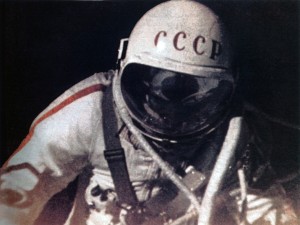
Alexi Leonov, Soviet cosmonaut during his spacewalk. Courtesy Vintagespace.files.wordpress.com

If the past is present, then it’s important that we understand the history of space exploration. At  Vintage Space, you can read an historical flash from the past in an article called Landings, NASA, and the Soviet Space Program, that explores the Soviet methods of getting astronauts safely back to Earth.

This week’s flashy news story (that turned out to be all mainstream-media handwaving, smoke and mirrors) about a Jupiter-like planet in the outer recesses of our solar system is Weirdwarp’s subject of discussion in Jupiter-like Planet Lurking Just Outside our Solar System is Extremely Unlikely. Guest poster Andrei (from ZMEScience) is a more sane and rational look at what the stories REALLY should have been about.

Next Big Future also presents a reasoned look at the outer solar system planet story in Tyche Planet X is still just a theory. Find out about the scientific paper by two respected scientists who posit the reasons why some long-period comet trajectories seem to have their comets coming from the wrong direction. Here’s your chance to go “behind the scenes” of a story that the MSM didn’t quite get right.

Nancy Atkinson at Universe Today talks with astronomer and planet hunter Mike Brown about that hypothetical giant planet lurking at the edge of the solar system to get his take on Tyche in About That Giant Planet Possibly Hiding in the Outer Solar System.

This week’s OTHER flashy news story, which covers events closer to Earth, turned out to be quite fascinating. It was the news about the Stardust-NExT mission to Comet Tempel-1.  I talk about the mission in a pair of back-to-back entries called Waiting for Tempel-1, written on “flyby night” and The Face of a Comet, posted the next day after some of the first images had been made public.

The COR1 coronagraph on the STEREO mission. Courtesy NASA.

At the center of our solar system, the Sun just keeps pumping out energy. Over at Vega 0.0, Francisco Sevilla writes about how coronagraphs enable astronomers to study the outer structures of the Sun’s superhot atmosphere. (Note the page is in Spanish, but you can translate using Google toolbar.)

Note: due to a software glitch, Astroblog’s entry didn’t make it in by the time I posted this. So, here is Ian Musgrave’s entry called The Kepler Bonanza: Making Sense of over 1,200 Extrasolar Worlds. Enjoy!

Over at Science Backstage, Italian science blogger and physicist Gianluigi Filippelli gives us a little “scientific baseball card” with important stats about the Sun and how it works.
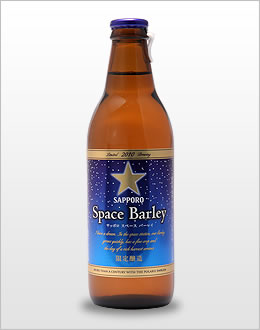
Beer made from barley grains descended from barley that spent five months on the Zvezda Service Module on the International Space Station.

Finally, I mentioned a tasty beverage at the top of this entry. In that spirit, let’s raise a toast to National Geographic’s Breaking Orbit blog for its entry Space Beer Ready for Tasting.  It’s about Australia’s 4 Pines Brewing Company and its human experiment involving tasting beer that is meant for drinking on commercial space flights. Find out why some beers you may like here on the ground wouldn’t be so great in space.

That’s it for this week’s Carnival of Space. As you can see, there are many and talented writers who blog each day about astronomy, space science, and all the topics related to these.  If you like what you see, visit their blogs and let the authors know what you think!

Thanks for dropping by and keep looking up!


Powered by WordPress

This blog a wholly pwnd subsidiary of Carolyn Collins Petersen, a.k.a. TheSpacewriter.
Copyright 2008, Carolyn Collins Petersen
Inama Nushif!
Image of Horsehead Nebula: T.A.Rector (NOAO/AURA/NSF) and Hubble Heritage Team (STScI/AURA/NASA)

“It is by Coffee alone I set my day in motion. It is by the juice of bean that coffee acquires depth, the tongue acquires taste, the taste awakens the body. It is by Coffee alone I set my day in motion.”

Spam prevention powered by Akismet

Podcast powered by podPress v8.8.10.13