
TheSpacewriter

  • About TheSpacewriter
  • Voice-overs, Videos, and ‘Casts
  • 365 Days of Astronomy!
  • The Spacewriter’s Store
  • Blog


These pages chronicle the work and ruminations of Carolyn Collins Petersen, also known as TheSpacewriter.

qrcode

I am CEO of Loch Ness Productions. I am also a producer for Astrocast.TV, an online magazine about astronomy and space science.

For the past few years, I've also been a voice actor, appearing in a variety of productions. You can see and hear samples of my work by clicking on the "Voice-Overs, Videos and 'Casts tab.

My blog, TheSpacewriter's Ramblings, is about astronomy, space science, and other sciences.


Ideas and opinions expressed here do not represent those of my employer or of any other organization to which I am affiliated. They're mine.

 Subscribe in a reader

Visit my main site at: TheSpacewriter.com.

**Comments are welcome; I do moderate them to weed out spam.

Contact me for writing and voice-over projects at: cc(dot)petersen(at)gmail(dot)com

I Twitter as Spacewriter

Blog entry posting times are U.S. Mountain Time (GMT-6:00) All postings Copyright 2003-2011 C.C. Petersen

Find online and local Astronomy
Astronomy | Add your site

Spacewriter’s Recent Posts

  • Sun Frenzy
  • A UFO? A Plane? What is It?
  • Planet Viewing
  • Double Your Viewing
  • Super Moon? Super What?
  • Sic Venus Transit Solis
  • Hurray, Hurray, the First of May

Archives

  • ► 2012 (29)
    • May 2012
    • April 2012
    • March 2012
    • February 2012
    • January 2012
  • ► 2011 (107)
    • December 2011
    • November 2011
    • October 2011
    • September 2011
    • August 2011
    • July 2011
    • June 2011
    • May 2011
    • April 2011
    • March 2011
    • February 2011
    • January 2011
  • ► 2010 (95)
    • December 2010
    • November 2010
    • October 2010
    • September 2010
    • August 2010
    • July 2010
    • June 2010
    • May 2010
    • April 2010
    • March 2010
    • February 2010
    • January 2010
  • ► 2009 (225)
    • December 2009
    • November 2009
    • October 2009
    • September 2009
    • August 2009
    • July 2009
    • June 2009
    • May 2009
    • April 2009
    • March 2009
    • February 2009
    • January 2009
  • ► 2008 (291)
    • December 2008
    • November 2008
    • October 2008
    • September 2008
    • August 2008
    • July 2008
    • June 2008
    • May 2008
    • April 2008
    • March 2008
    • February 2008
    • January 2008
  • ► 2007 (114)
    • December 2007
    • November 2007
    • October 2007
    • September 2007
    • August 2007
    • July 2007
    • June 2007
    • May 2007
    • April 2007
    • March 2007
    • February 2007
    • January 2007
  • ► 2006 (72)
    • December 2006
    • November 2006
    • October 2006
    • September 2006
    • August 2006
    • July 2006
    • June 2006
    • May 2006
    • April 2006
    • February 2006
    • January 2006
  • ► 2005 (56)
    • December 2005
    • November 2005
    • October 2005
    • September 2005
    • August 2005
    • July 2005
    • June 2005
    • May 2005
    • April 2005
    • March 2005
    • February 2005
    • January 2005
  • ► 2004 (96)
    • December 2004
    • November 2004
    • October 2004
    • September 2004
    • August 2004
    • July 2004
    • June 2004
    • May 2004
    • April 2004
    • February 2004
    • January 2004
  • ► 2003 (74)
    • December 2003
    • November 2003
    • October 2003
    • September 2003
    • August 2003
    • July 2003
    • May 2003
    • April 2003
    • March 2003
    • January 2003
  • ► 2002 (21)
    • November 2002
    • October 2002
    • August 2002
    • June 2002
    • March 2002
    • February 2002

Calendar

May 2012
S M T W T F S
« Apr    
 12345
6789101112
13141516171819
20212223242526
2728293031  


Add to Google


Like space music?

Check out my favorite space music artist: Geodesium at Geodesium.com


Blogroll

  • 21st Century Waves - Technology Booms and Human Expansion Into the Cosmos
  • About.Com Space/Astronomy
  • Adot’s NotBlog
  • Astroengine.com
  • Astronomy Blog
  • Astronomy Cast
  • Badastronomy.Com
  • Blooloop
  • BLooloop: CCP
  • Captain Disillusion
  • ChandraBlog - Chandra X-ray Telescope
  • Cosmic Log
  • Cosmic Mirror
  • Cosmic Variance
  • Cosmos4u
  • Discovery Space
  • DP’s Astronomy Blog
  • EurekAlert
  • European Southern Observatory
  • Friends of the Griffith Observatory
  • Gemini Observatory
  • Griffith Observatory
  • Hairy Museum of Natural History
  • Hubble Space Telescope
  • Kids Directory
  • Loch Ness Productions - Cosmic content
  • Mike Brown’s Planets
  • MIT/Haystack Observatory
  • MWA Vodcast
  • NASA Climate Change
  • National Public Radio
  • Observing the Sky
  • One Astronomer’s Noise
  • Pharyngula
  • Prince of Pithy
  • Science Made Cool
  • Significant Snail
  • Solar System Watch
  • Space Times News
  • Space Weather FX Vodcasts
  • Star Stryder
  • Stop Unethical Recission
  • String Theory
  • The Daily Galaxy
  • The Mathroom (possibly NSFW)
  • The Meridiani Journal
  • The Planetary Society Blog
  • The Way Things Break
  • TheCrotchetyoldfan
  • Truth
  • Understanding Science
  • Universe Today

Other blogs that link to me.


Listed on BlogShares


Living with a Star

Space Weather and Its Effects
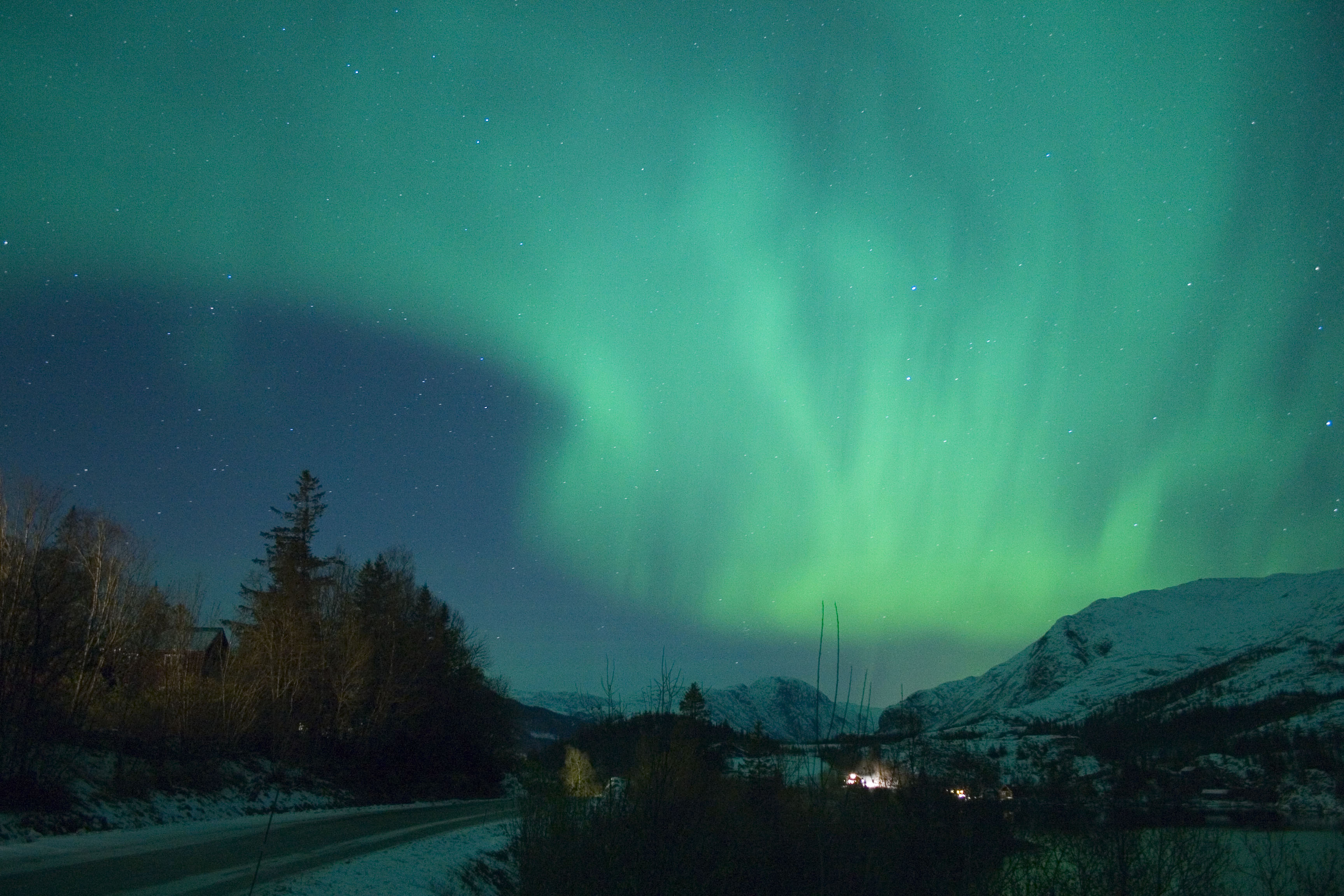
The aurora borealis observed in Norway on October 28, 2006. Image by Rafal Konieczny.

The aurora borealis observed in Norway on October 28, 2006. Image by Rafal Konieczny. (Click to enlarge.)

Our 365 Days of Astronomy podcast for March 19, 2009 takes us on a short visit to MIT’s Haystack Observatory in Westford, Massachusetts. There, a group of atmospheric researchers study Earth’s atmosphere and how it is affected by space weather — a  term that atmospheric scientists apply to the geomagnetic and near-earth disturbances caused by solar storms, and most often as a result of coronal mass ejections. Most of us are familiar with the aurora borealis and aurora australis — which are caused by space weather. These are gorgeous light shows made as different gases flouresce in our upper atmosphere.

But, space weather also has its dangerous side. A strong space weather event can disrupt telecommunications, navigation systems, satellite signals, and even shut down power grids.

In fact, in March 1989, a huge space weather event set up huge circulating currents that overloaded a power grid in Canada — shutting off the lights for thousands of people across Eastern Canada.

One of the latest technologies — the global positioning system (GPS)– is as susceptible to interruptions by geomagnetic storms as any other communications system. Because we rely on GPS for many things, including timing signals for cellular phones, ATM systems, as well as navigation signals for airplanes, ships, trains, and even our cars, a GPS outage could be a real problem.

So, how could this affect you personally? Well, imagine if a big solar flare stirred up huge space weather storms here and disrupted GPS timing signals that banking systems use for financial transactions.  It’s entirely possible that if those signals are stopped or even delayed, it could (and I stress “COULD”) keep you or me or any of millions of people from getting money out of an ATM machine.

Many “bits” of our technological society are tied together using systems that are vulnerable during space weather storms.  In fact, NASA recently sent out a press release about the risks to our technology from space weather. It’s important that we understand the risks from space weather and find out ways to avoid damaging our communications systems and power grids. That’s where space weather researchers come in — and what they learn each day by studying the effects of the Sun on Earth’s ionosphere and lower atmosphere is invaluable.

Space weather and its affects on technology. Courtesy L.J. Lanzerotti, Bell Laboratories (Lucent Technologies, Inc.)  (Click to enlarge.)

Space weather and its affects on technology. Courtesy L.J. Lanzerotti, Bell Laboratories (Lucent Technologies, Inc.) (Click to enlarge.)

Obviously, we’d all like to avoid disruptions due to solar storms — but it’s not  like we can predict when a storm will erupt from the Sun. We can, however, learn about how such storms proceed and affect our planet, and then use that knowledge to protect ourselves when space weather DOES attack.

Scientists at MIT Haystack Observatory — along with researchers around the world — are constantly studying the effects the Sun has on our ionosphere, which in turn affects  our technology in many ways.

To learn more about Haystack’s atmospheric science program, visit their Atmospheric Sciences page. In addition, we are working with Haystack to create a series of vodcasts about spaceweather called Space Weather FX. Check ‘em out!

In addition, we have posted a great page of spaceweather links here.  You can also check out Spaceweather.com, which provides daily looks at the Sun, comets, meteor showers and other phenomena, as well as the Space Weather Center, the SEC/NOAA Space Weather Prediction Center, and the SOHO (Solar and Heliospheric Observatory) spacecraft page (which will give you up-to-date images of the Sun in various wavelengths).

Visit here for more information on GPS systems and here to learn about the WAAS system that pilots use for navigation.

Be Sociable, Share!
  • LinkedIn
  • Tweet


Powered by WordPress

This blog a wholly pwnd subsidiary of Carolyn Collins Petersen, a.k.a. TheSpacewriter.
Copyright 2008, Carolyn Collins Petersen
Inama Nushif!
Image of Horsehead Nebula: T.A.Rector (NOAO/AURA/NSF) and Hubble Heritage Team (STScI/AURA/NASA)

“It is by Coffee alone I set my day in motion. It is by the juice of bean that coffee acquires depth, the tongue acquires taste, the taste awakens the body. It is by Coffee alone I set my day in motion.”

Spam prevention powered by Akismet

Podcast powered by podPress v8.8.10.13