
Category Archives: astronomy

Sgr A* Is a Hungry Black Hole

Chandra X-Ray Observatory Uncovers its Eating Habits
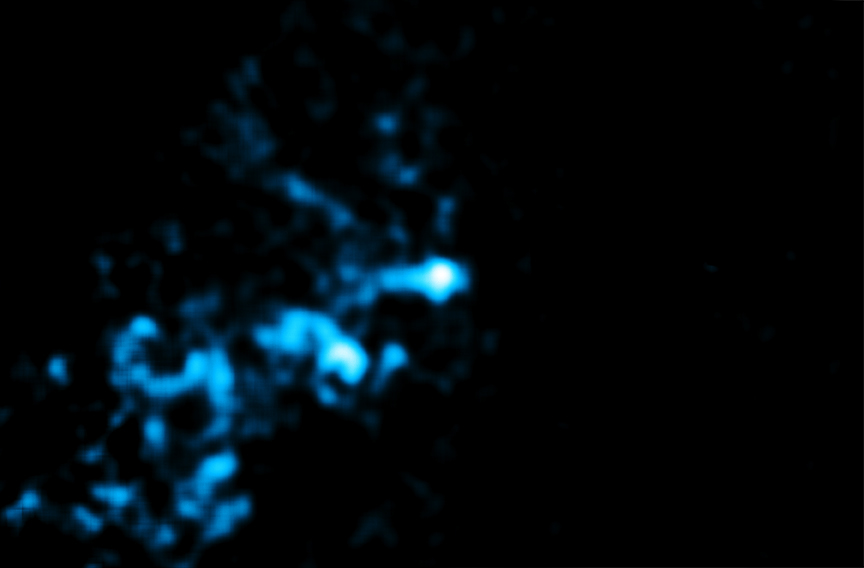
This image is from a new study of Chandra observations taken over twelve years that shows rapid variations in the x-ray emission from gas clouds surrounding the supermassive black hole. The phenomenon, known as a “light echo,” provides astronomers an opportunity to piece together what objects like Sgr A* were doing long before there were x-ray telescopes to observe them. Courtesy Chandra X-Ray Observatory team.

Our galaxy has a hungry supermassive black hole at its heart. It devours anything that happens to fall its way. Astronomers know that it has eaten a couple of times in the past few centuries and it’s doing it again right now. By studying x-ray emissions given off as the black hole eats, and measuring those emissions as they bounce off nearby clouds, astronomers can trace the eating habits of Sagittarius A* (the black hole’s name; Sag A* for short).

Over the past 12 years, astronomers using NASA’s Chandra X-ray Observatory have studied the central area of the Milky Way around the black hole. The data they took contains evidence that the normally dim region very close to Sgr A* has flared up with at least two very bright outbursts in the past few hundred years.

The astronomers watched rapid variations in the x-ray emission from gas clouds surrounding Sgr A*. So, how were the light-echoes produced? Astronomers suggest that they came about when when large clumps of material, possibly from a disrupted star or planet, fell into the black hole. Some of the x-rays then bounced off gas clouds about 30-100 light-years away from the black hole. Just as echoes of sound reverberate long after a noise is created, light echoes in space replay the original event.

While light echoes from Sgr A* have been seen before in x-rays by Chandra and other observatories, this is the first time that evidence for two distinct flares has been seen within a single set of data. The light echoes suggest that the area very close to Sgr A* was at least a million times brighter within the past few hundred years. X-rays from the outbursts (as viewed in Earth’s time frame) that followed a straight path would have arrived at Earth at that time. However, the reflected x-rays in the light echoes took a longer path as they bounced off the gas clouds and only reached Chandra in the last few years. This is how scientists know that Sgr A* has been snarfing down material that falls its way. And, it doesn’t do it quietly. Producing x-rays implies a tremendous amount of energy is released each time the black hole gobbles up material.

If you want to know more about how the astronomers studied these emissions, check out the full story on the Chandra web pages. And, stay tuned. Astronomers are tracking an other cloud of gas and dust that is headed for Sgr A*. It is arriving about now, and will take about a year to be fully assimilated into the collective that is Sgr A*. Observatories are geared up to watch the region around the black hole light up as this three-solar-mass cloud of material heads into oblivion.

Astrobaza Calling Space

Hands-On Astronomy in Poland

The Astrobaza student-run observatory in Piwnice in central Poland, not far from the town of Torun (the birthplace and home of Copernicus). They're well-equipped and open to students in all grades up to age 19.  Copyright 2013 Carolyn Collins Petersen
The Astrobaza student-run observatory in Piwnice in central Poland, not far from the town of Torun (the birthplace and home of Copernicus). They’re well-equipped and open to students in all grades up to age 19. Copyright 2013 Carolyn Collins Petersen

I just returned from a week in Poland, the home of Nicolaus Copernicus, composer Frederic Chopin, and a popular set of student-run observatories called Astrobazas (Web site is in Polish, but a Google Translate will give you the idea).

They are equipped with 14″ Meade telescopes, plus a variety of other instruments. The goals of the Astrobaza project are to bring astronomy to students interested in learning more about the science of the stars. The organizers wanted to create modern educational opportunities for the students, provide 14 observatories next to schools throughout the region called Kujawsko-Pomorskie, in central Poland. They achieved their goals and the systems are now operational, with groups of students in each area taking advantage of the chance to do some real astronomy.

The project provides state-of-the art equipment for astronomy and weather observations, computer coding, and other related activities. The activities are woven into school curricula and satisfy the Math, Science, and Technology (MST) standards in the country.

We visited two of these Astrobazas as part of a hosted trip held after the Communicating Astronomy with the Public conference held in Warsaw last week. We were guests of local governments eager to show off what they have in place for their students in the Astrobazas.  At the first stop, located near the town of Torun, the students greeted us on arrival, just as the Sun was setting. They had hoped to have us do some observing, but clouds had moved in. We toured the facilities and then adjourned indoors for some hands-on astronomy activities. They divided us into groups that included at least two or three of the visiting astronomer/PIO group, teachers from the school, and students. Despite our language differences, we all had a wonderful time concocting some unique ways to communicate such astronomy topics as black holes and dust-scattering of light.  After that, we all adjourned to a lovely banquet dinner.

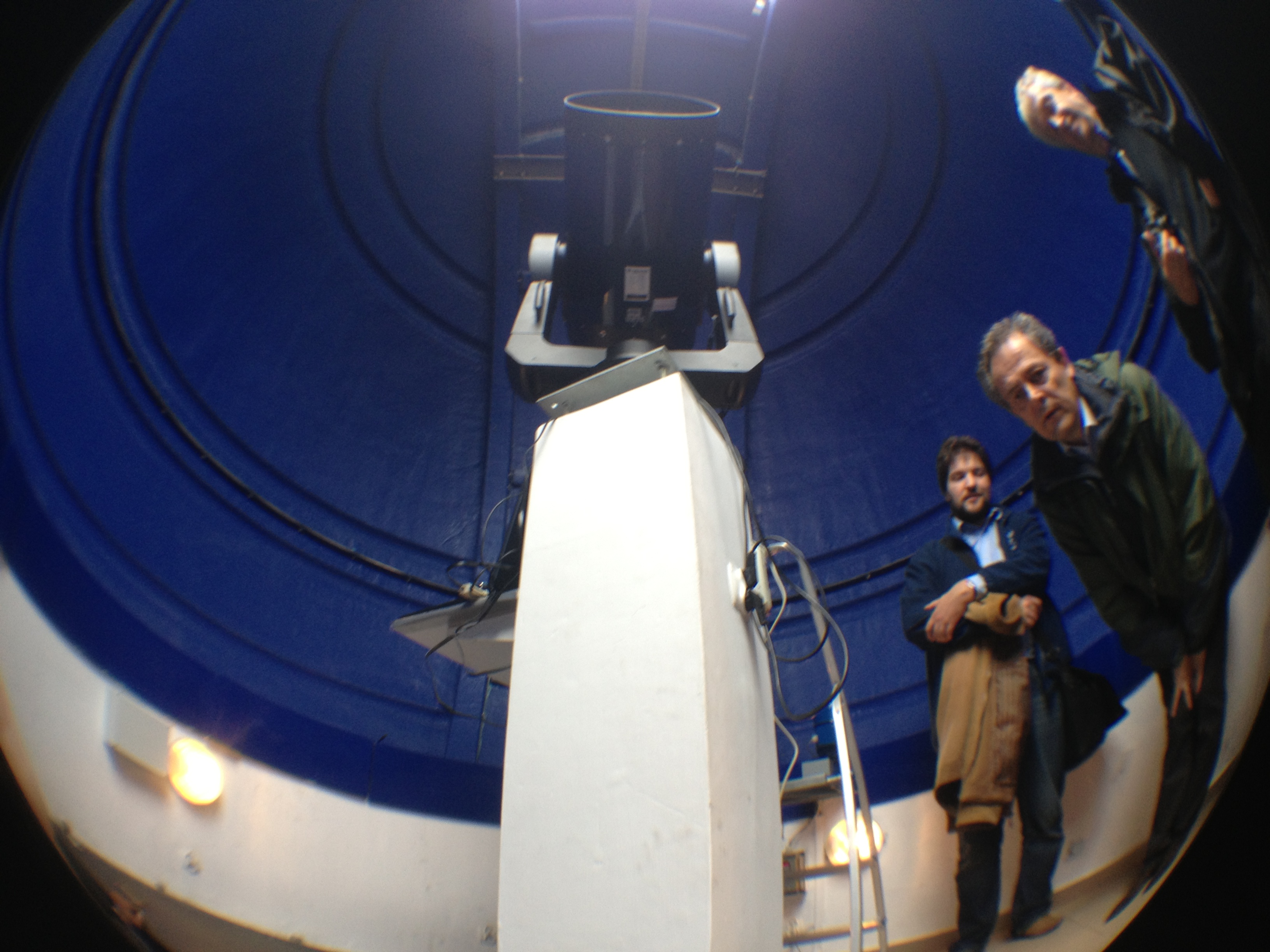
A fisheye-lens view of the telescope in the Astrobaza near Torun.
A fisheye-lens view of the telescope in the Astrobaza near Torun. Copyright 2013, Carolyn Collins Petersen

The next day we visited the Astrobaza in Piwnice, where the students set up telescopes equipped with solar filters for sungazing. We had a chance to talk with them, and their teachers before heading off to lunch at a local resort called the Romantic Palace.

I was really impressed with the enthusiasm these students had for astronomy. They are achieving great things, and I have no doubt that more than a few of them will make the stars their life’s work. Throughout the visit, I kept wondering what people in my country (the U.S.) were doing to encourage astronomy learning among students in a manner similar to what the Poles are doing for their children. Is there a network of well-equipped observatories for ALL kids (not just ones who go to wealthy schools or university lab schools) to use to learn the stars? If so, where are they? If not, why not? If you know of places like Astrobaza, let me know in comments.

As I walked through these sites, I kept asking myself, “What better way to introduce kids to the sciences?”  Astronomy IS a gateway science, and the young astronomers we met in Poland last weekend are rushing through that gateway with enthusiasm.