
Fans Explore Hubble, Pluto and Beyond

Every year I visit with the denizens of dozens of different worlds at the annual StarFest Entertainment Con in Denver (organized by Starland.com). These are the Star Trek and Star Wars citizens, along with Dr. Whovians, Middle Earthers, visitors from the many different flavors of anime and comic-dom, and others of the creatively anachronistic bent.
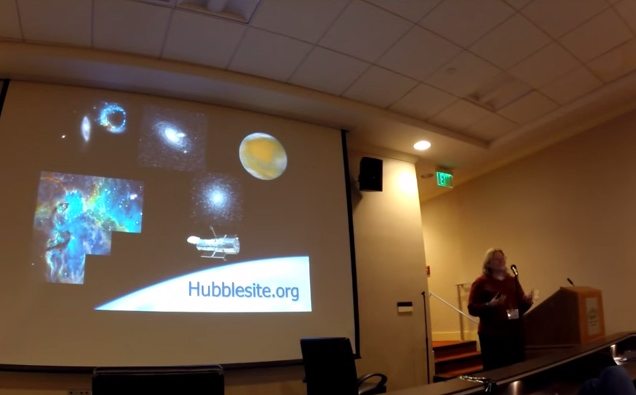
My job at the Con is to give science talks. It was the 13th or 14th con I’ve spoken at for the StarLand people, and I began doing them back before I started grad school. Of course, I’m a Trekkie from WAY back, so I get my geek on at the same time I’m sharing science with others.
This year I focused on exoplanets—the many worlds fans have visited in science fiction and fantasy—by way of looking at those discovered by astronomers. I also gave a talk commemorating the 25th anniversary of the launch of Hubble Space Telescope, and even before the talk started people were stopping to ask when it would be so they could get there early for a seat. The talks were standing room only, we had lots of time for Q&A, and there were many hallway conversations about astronomy and space exploration.
Each time I talk at StarFest (and even when I’m speaking to audiences in other venues) I get a LOT of questions about Pluto. You know what question people ask the most: why isn’t it a planet? This year, I decided to bring Pluto with me so folks could get first-hand information from a real-life Pluto explorer: Dr. Alan Stern. He’s an old friend from grad school, and the Principal Investigator for the New Horizons mission encounter with Pluto. I figured, if anybody could excite people even more than they already ARE about this dwarf planet, it would be Alan.
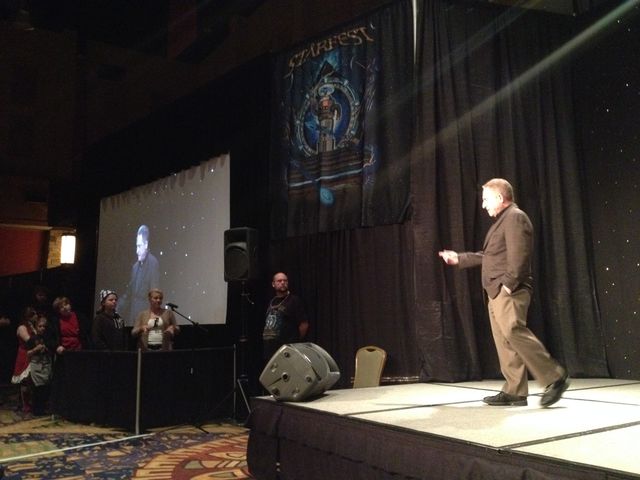
He took the stage on Saturday morning and from the first words, he had the audience enthralled as he talked about the mission, Pluto’s characteristics, and yes —why the IAU decision in 2006 was wrong. Simply put, planetary scientists are the best ones to make the decision about what is or isn’t a planet, and the criteria “voted on” by the remnants of the IAU meeting that year just don’t hold up in a court of planetary definitions. Particularly since we’re still figuring out what the solar system actually contains.
Right now we know of three times more dwarf planets than we do of actual “planets”. Alan explained it all very well, and the Q&A after his session went on for more than 30 minutes. It was a hit and they’d like to have him back again next year to do a follow-up.
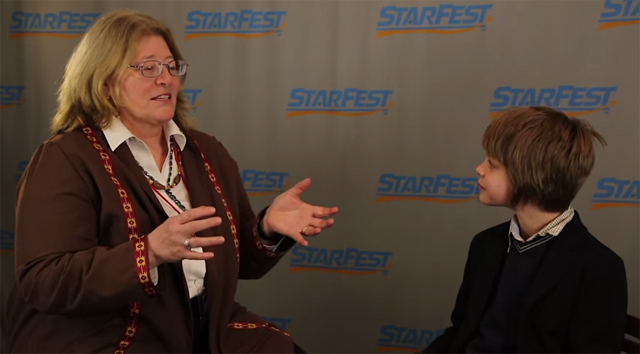
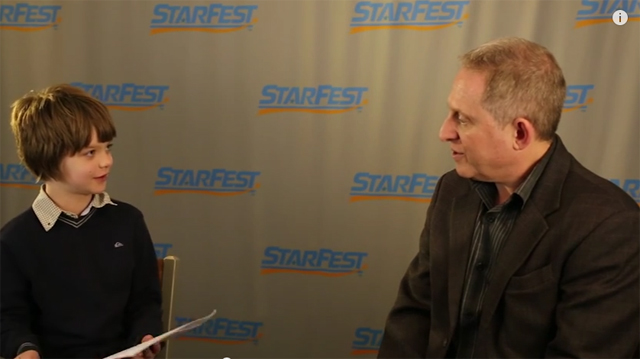
One of the most interesting experiences I had at StarFest this year was taking part in media interviews. The ones that stand out were with DMGIce, a local video producer with a world-wide audience, and a fascinating interview with a young lady named Presley Alexander who is not only a science whiz, but has her own YouTube channel. She is interested in a great many topics and makes videos as part of her home schooling. She was interviewing as many of the guest speakers at StarFest as she could get, and both Alan and I sat down for interviews with her. She was amazing, energetic, professional, well-prepared, and it was a pleasure to talk with her. Check out her channel when you get the chance.
I’ve always known that there are many science-savvy people attending these cons, even among the other guest speakers. This year we had artist Rick Sternbach (best known for his Star Trek work) and terrifically well-versed in spacecraft (since he builds models), and actor Armin Shimerman (who played Quark on Star Trek: Deep Space 9), who I had a marvelous conversation with about dark matter.
People like astronomy and space—not just at StarFest. I’ve spoken at Shore Leave and WorldCon, and found the same thing to be true there. Among all the folks dressed as Klingons, Storm Troopers, Princess Leia, Sailor Moon characters, hobbits, wizards, Spiderman, Groot, Wonder Woman, and so on, there is a deep curiosity about the universe around us. It shouldn’t be a surprise—I’ve always thought that if your mind can handle all the interesting stories told in science fiction and fantasy, comics, and movies, you should be able to handle the wonders of the cosmos. Or maybe it’s the other way around.
Either way, judging by the folks who flocked to my two talks and Alan’s presentation, I think that’s all still true. I’ve been asked to organize a more extensive science track for StarFest in the next few years, which I think is a pretty good indication that science and fandom can and do co-exist. Wish me Qa’plah!

