
We are Losing the Dark
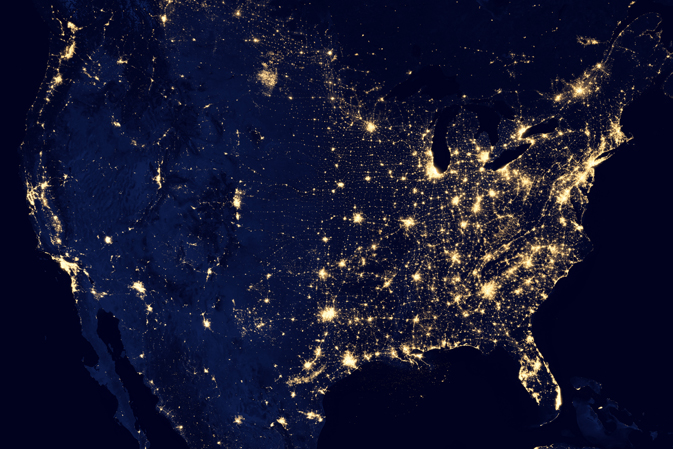
I live in a dark-sky area. Or, mostly dark-sky, since the light pollution from nearby Denver and the Front Range seep over the mountains and blot out the eastern horizon. It used to be that humans had unfettered access to the night sky. Now, we have to try and see the stars through a growing haze of light shining upwards. Why do we shine light UP? Why light up the sky? It’s totally unnecessary, particularly when what we want to light up is on the ground, not in the sky. Every year we waste billions of dollars in lighting up the sky. That’s a lot of fossil fuel to be burned and wasted, fuel that could be better used elsewhere.
There are reasons to light things up at night, no question about it. But, the sky isn’t one of those things. And, overuse of light not only costs more money, it affects the health of people and wildlife. Lights at night affect people’s ability to sleep, which is a primary component of good health. There is also growing medical evidence that extra light at night plays a role in a higher risk of breast and prostate cancer in people who are exposed to it. In addition, wildlife suffers from our overweening reliance on sending light UP to the sky. The environmental cost is incredibly high. And, it doesn’t have to be that way. We can learn to use light properly and still maintain safety and security.
 The solutions to light pollution actually start with each of us: we have it in our power to make sure our lighting around our homes and in our towns is not facing UP. We can use fully shielded fixtures which actually help save money. We can also properly light ONLY the places that need it. And, if we don’t need the lights on, we can simply turn them off. Saves money and our health.
The International Dark-Sky Association is the world’s premier light pollution mitigation organization and the group has an amazing amount of free information on their web site that anyone can access interested in mitigating light use. One of the things they have is a video that I co-produced for them, called Losing the Dark, available as a free download for planetariums and also as a flat-screen HD for use on computers, kiosks, in auditoriums, classrooms and other venues equipped with a video projector. In the months since its February 2013 release, the videos have gotten a great deal of attention on IDA’s Youtube channel and also on the Loch Ness Productions Youtube channel. Many planetariums (both fulldome video and classic theaters) have gotten the show. It’s a six-minute look at light pollution and what we can do to mitigate it.
Recently IDA posted a survey about how people are using the video. If you have downloaded it, they’d love to hear from you about how you use it, and so on. It’s a short, confidential survey and well worth the couple of minutes
