One Is the Loneliest Number

Or Is It?

I had to do a bit of a long drive today and while I was tootling along in the car, I heard the old Three Dog Night song written by Harry Nilsson called “One is the Loneliest Number”. And as is my usual case, that set me to thinking about all kinds of things, including…  the number 1.

Mathematically, 1 is an interesting entity.  First, it stands for a single thing.  Sometimes we refer to it as “unity”.  It’s the first non-zero whole number, and if you multiply any other number by 1, you get that number.  You get an “identity”.  So 1 x 1 = 1, 1 x 50 = 50, and so on. It’s an odd number, meaning it can’t be divided evenly by 2. There’s lots to know mathematically about 1, which you can read here.

1 (one) gets a lot of play in cultural references — like in the song I mentioned above.  Who hasn’t heard of Neo being “the one” (in The Matrix), or calling someone your “one and only” in a romantic setting?

In binary code, 1 is one of two pieces in a base-2 system of counting (the other being zero).  The binary system is used by all computers, which is where you often see the term “ones and zeros”.

This image of the spiral galaxy NGC 2841 began as data--a series of ones and zeros transmitted back to Earth from Hubble Space Telescope. Courtesy STScI.

In astronomy these days, all the digital imagery and data you see streaming from various instruments is in the form of “ones and zeros” which get encoded into the pictures and graphs we see.  Astronomers use fairly complex computer programs to decode the images, apply algorithms to remove errors and data dropouts, and colorize, sharpen, mask, or other imaging processes to help them understand what they see in their images and data.

Astronomy brings me to an interesting element: hydrogen. Yes, it’s also part of what we study in chemistry when we learn the elements. In fact, hydrogen is the chemical element with the atomic number 1. But, when you start to study the universe in astronomy, you very quickly run into hydrogen, which means you quickly learn about it as a chemical element.

The most abundant isotope of hydrogen (think of “isotope” as “form”) has one proton in its nucleus and no neutrons.  Hydrogen, element number 1, is the most abundant chemical element in the universe. An astounding 75 percent of the normal matter in the universe (not including dark matter) is hydrogen, and 90 percent of the atoms in the universe are hydrogen. When you look at stars, or nebulae, or the planet Jupiter for that matter, you’re seeing LOTS of hydrogen.  In clouds of interstellar gas and dust where stars are born, for example, the hydrogen is in the form of a gas — H2. It’s in what’s known as the “molecular state”, where atoms of hydrogen bond to form molecules of the gas. Hydrogen also exists as free atoms, and also in an energized (think: heated) and magnetized state called a plasma.

Molecular structures of the 21 proteinogenic amino acids (click to enlarge). Courtesy Dan Cojocari under a Creative Commons Atribution-Share Alike 3.0 license.

As befits an element whose number is 1, hydrogen was the first element created in the Big Bang. Within moments of that creation, heavier isotopes of hydrogen came about (like deuterium) and then forms of helium and lithium. But hydrogen was number 1 in the beginning.  And, judging by its abundance throughout the cosmos, it’s still number 1. It’s what you need to form stars (from those gas clouds), it is an essential component of many chemical compounds like water (H2O), or amino acids (see the image to the right).

YOU are largely made of water, and thus your body has a great deal of Element Number 1 in it. All life on this planet dabbles in water, evolved in water, and uses water to survive. There are billions and billions of life forms on Earth, and they all depend in some way on water, which is mostly hydrogen.

That hydrogen link gives us a common bond with the rest of the cosmos — the single atomic and elemental link that stretches back across more than 13.7 billion years to when the first atomic particles of hydrogen came into being and began the dance of cosmic evolution.

So, in a sense, while 1 may be the loneliest number, because of hydrogen, we are all one with the universe in a very elemental and scientific way.

The Carnival of Space #185

Welcome to this week’s Carnival of Space

And, welcome to my humble blog.  This week, my science-writer colleagues and I have multiple servings of tasty cosmic carnival fare for your delectation and intellectual curiosity. So, grab a brass ring, a refreshing beverage (more on that in a minute), and let’s get started down the space midway!

First into the center ring is Astropixie, with an a look at Determining Redshifts, a quick peek at how astronomers figure out just how far away things are in the universe. Amanda Bauer takes you step-by-step through the ways that astronomers determine distances in the cosmos.

Life in a Martian meteorite? Jury's still out on this one, but it begs the question about life's precursors. Courtesy NASA.

Next, the folks at Cheap Astronomy from Canberra, Australia, weigh in with a pair of podcasts about alien biology The first talks about the role that water plays in the formation and sustenance of life. The second makes the case for carbon as the basis for life, particularly on our planet. If you’ve ever wondered about the chemical basis for life on Earth, these make a good introductory listen.

Parallel Spirals explores the publication of information about the recent Chandrayaan water discovery mission idea a bit more in Hubble Supports Chandrayaan Water Discovery. The formal science paper about how Hubble Space Telescope confirmed the presence of water on the Moon while looking at the LCROSS impact site will be published very soon.

Over at Steve’s Astro Corner, in On the Horizon What is the Next Big Thing? Steve Tilford brings you a look the technologies for exploration outlined in the Decadal Survey for Astronomy and Astrophysics. If it all gets built and funded, we’ll be studying everything from dark energy to the warm, dusty universe that will seen by the James Webb Space Telescope.

The future is also the subject of an essay called Population Limits of the earth and the solar system factoring in improved technology over at Next Big Future. It’s about how the modern issues of how much population Earth can support (reasonably) and the growth of technological power and knowledge. Can we put these two together to optimize our chances for the human population of space? Head over and find out!

Materials science and understanding the effect of vacuum and thermal friction on rotating particles may be very relevant to astronomers as they seek to understand cosmic nanoparticles such as interstellar dust and the optical spectra of rotating molecules.  This is the subject of a short blog entry called Vacuum has friction from an effect similar to the casimir effect,  also available at Next Big Future.

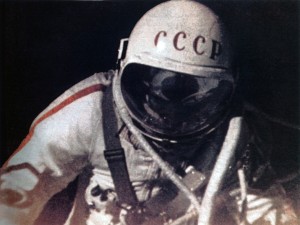
Alexi Leonov, Soviet cosmonaut during his spacewalk. Courtesy Vintagespace.files.wordpress.com

If the past is present, then it’s important that we understand the history of space exploration. At  Vintage Space, you can read an historical flash from the past in an article called Landings, NASA, and the Soviet Space Program, that explores the Soviet methods of getting astronauts safely back to Earth.

This week’s flashy news story (that turned out to be all mainstream-media handwaving, smoke and mirrors) about a Jupiter-like planet in the outer recesses of our solar system is Weirdwarp’s subject of discussion in Jupiter-like Planet Lurking Just Outside our Solar System is Extremely Unlikely. Guest poster Andrei (from ZMEScience) is a more sane and rational look at what the stories REALLY should have been about.

Next Big Future also presents a reasoned look at the outer solar system planet story in Tyche Planet X is still just a theory. Find out about the scientific paper by two respected scientists who posit the reasons why some long-period comet trajectories seem to have their comets coming from the wrong direction. Here’s your chance to go “behind the scenes” of a story that the MSM didn’t quite get right.

Nancy Atkinson at Universe Today talks with astronomer and planet hunter Mike Brown about that hypothetical giant planet lurking at the edge of the solar system to get his take on Tyche in About That Giant Planet Possibly Hiding in the Outer Solar System.

This week’s OTHER flashy news story, which covers events closer to Earth, turned out to be quite fascinating. It was the news about the Stardust-NExT mission to Comet Tempel-1.  I talk about the mission in a pair of back-to-back entries called Waiting for Tempel-1, written on “flyby night” and The Face of a Comet, posted the next day after some of the first images had been made public.

The COR1 coronagraph on the STEREO mission. Courtesy NASA.

At the center of our solar system, the Sun just keeps pumping out energy. Over at Vega 0.0, Francisco Sevilla writes about how coronagraphs enable astronomers to study the outer structures of the Sun’s superhot atmosphere. (Note the page is in Spanish, but you can translate using Google toolbar.)

Note: due to a software glitch, Astroblog’s entry didn’t make it in by the time I posted this. So, here is Ian Musgrave’s entry called The Kepler Bonanza: Making Sense of over 1,200 Extrasolar Worlds. Enjoy!

Over at Science Backstage, Italian science blogger and physicist Gianluigi Filippelli gives us a little “scientific baseball card” with important stats about the Sun and how it works.

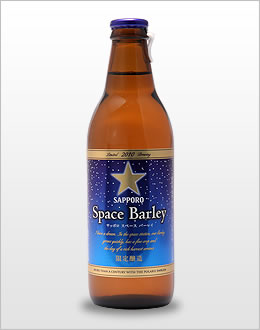
Beer made from barley grains descended from barley that spent five months on the Zvezda Service Module on the International Space Station.

Finally, I mentioned a tasty beverage at the top of this entry. In that spirit, let’s raise a toast to National Geographic’s Breaking Orbit blog for its entry Space Beer Ready for Tasting.  It’s about Australia’s 4 Pines Brewing Company and its human experiment involving tasting beer that is meant for drinking on commercial space flights. Find out why some beers you may like here on the ground wouldn’t be so great in space.

That’s it for this week’s Carnival of Space. As you can see, there are many and talented writers who blog each day about astronomy, space science, and all the topics related to these.  If you like what you see, visit their blogs and let the authors know what you think!

Thanks for dropping by and keep looking up!

Exploring Science and the Cosmos

Spam prevention powered by Akismet