
The Stardust-NExT Comet Watch
1:00 am. MST (0800 UT) February 15, 2010
As I sit here waiting for the first close-up images of Tempel-1 from the Stardust-NExT mission, I can’t help but recall the nights (it always seemed to be late nights) I sat at JPL during the Voyager missions to the outer planets, back in the 1980s. I was a science reporter at that point, and we all waited breathlessly, tiredly, but excitedly for images of the planets and their moons. Those pictures were coming from spacecraft virtually streaking past their targets, gathering images on the fly.
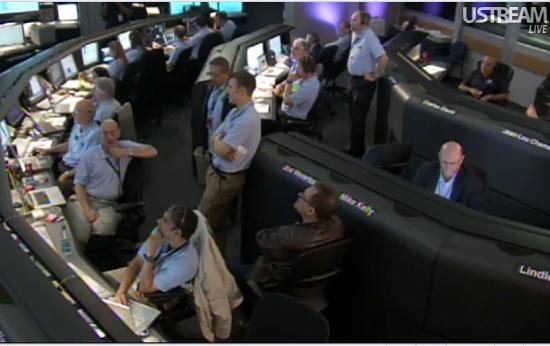
Some years later, I went out to JPL again, this time to cover a couple of Mars missions. One of them — the Pathfinder mission — was amazingly thrilling and it was like I imagined it must have been in the newsroom when the Viking spacecraft settled onto the surface of Mars. The first images from that distant world were amazing and we all were completely delighted with them.
The second mission to Mars that I covered was Mars Polar Lander. We waited breathlessly for the first data to come in… but it never did. The disappointment and grief that we all felt on the loss of that spacecraft were palpable throughout the rooms. We waited for days, hoping for a recovery, but it never came.
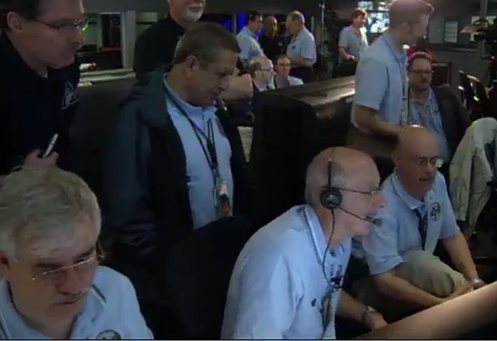
This experience has the same feeling of waiting and hopefulness. We already know that there WILL be images, because they are safely stored on the spacecraft and are on their way to Earth. So, no disaster awaits. But there is one big difference for me, at least. This time, instead of sitting at JPL in a press room with dozens of other reporters and scientists, I’m at home, watching the mission unfold via DirecTV and NASA TV, as well as USTREAM via the World Wide Web. There’s a constant Twitter stream of commentary, plus a conversation on USTREAM, with people from around the world commenting.
Earlier this evening, I SKYPE’d with my old friend and colleague Kelly Beatty, whom I first met at JPL Voyager encounter. He, too, was sitting at home, watching the proceedings via the Web. We both joshed around about how it was so much easier to do this from home. All the excitement, none of the cross-country flights and jostling for space on overcrowded press tables.
Interestingly and poetically enough, the same press room that we used to work in at JPL is now a beautiful visitor’s center complete with a set of astronomy and space science exhibits that I wrote last year for JPL!
Well, back to the Stardust NExT mission. The spacecraft made its closest approach to the comet a couple of hours ago (late on the 14th), passing within 200 kilometers of the nucleus of the comet. During that encounter, the dust sensors detected ‘hits’ from material streaming out from the comet. The “periscope” camera took 72 images of the nucleus, including five “bracketed” images at closest approach. Those are what we’re waiting on now. I’m watching the scientists live on screen, and once again, the feeling of anticipation and excitement is palpable, even through the cameras and the Web.
~1:45-2:00 am. MST (0845-0900 UT) February 15, 2010
Even though the first images were delayed due to an equipment swapout at Madrid and the spacecraft had to be re-instructed to send down the images, the wait was worth it. Just now, the scientists were told “The data you’re waiting for has been sent to you.” They were told that all images were centered in the field of view, and in 15 minutes, we’ll see the first image as it comes out of processing.The closest approach image will be the second one downloaded and they have now told us that the distance to the comet in that image is 183 kilometers.
The scientists are cheerful, happy, and excited. I know they will be relieved, happy, and excited when the first pictures come up. This spacecraft and its mission have been part of their lives for years.
~2:16 a.m. MST (0916 UT) February 15, 2010
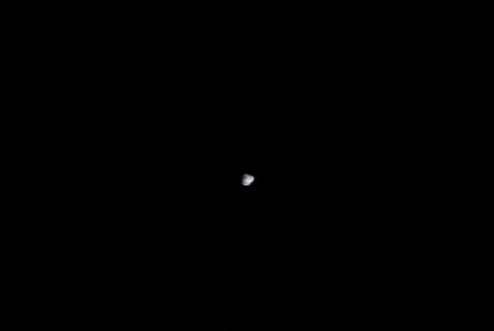
The first image that the spacecraft took finally appeared just a few minutes ago. Contrary to what everybody has been expecting, it’s not the closest approach image. That, apparently will not “come down” for a few hours yet. The team has decided to let the spacecraft stream the images down in the order they were taken, which means that in about six hours, we should see the closest approach images.
This was not the order they were commanded to come down in — what they wanted to see FIRST were the close approach images. But, the spacecraft is doling them out one by one in “exposure order”, and we will all have to be patient. Now, the good news is that the close-approach images will be down before the morning press conference, so we’ll all tune in then for some images and science.
This is how science sometimes works. You’re at the mercy of your instrument — and in this case, it’s an instrument out at a comet a few AU from Earth. As the rest of the morning goes by, more images will show up. I, for one, can’t wait to see them! It may not look like much now, but just wait til we see the close-ups! For now, I’ll keep checking (as we all will) at the Stardust News site for the remaining pictures. Stay tuned — this comet’s got a lot to tell us!
