
Come Sail Away

Exploration and Travel are the Keys to the Cosmos
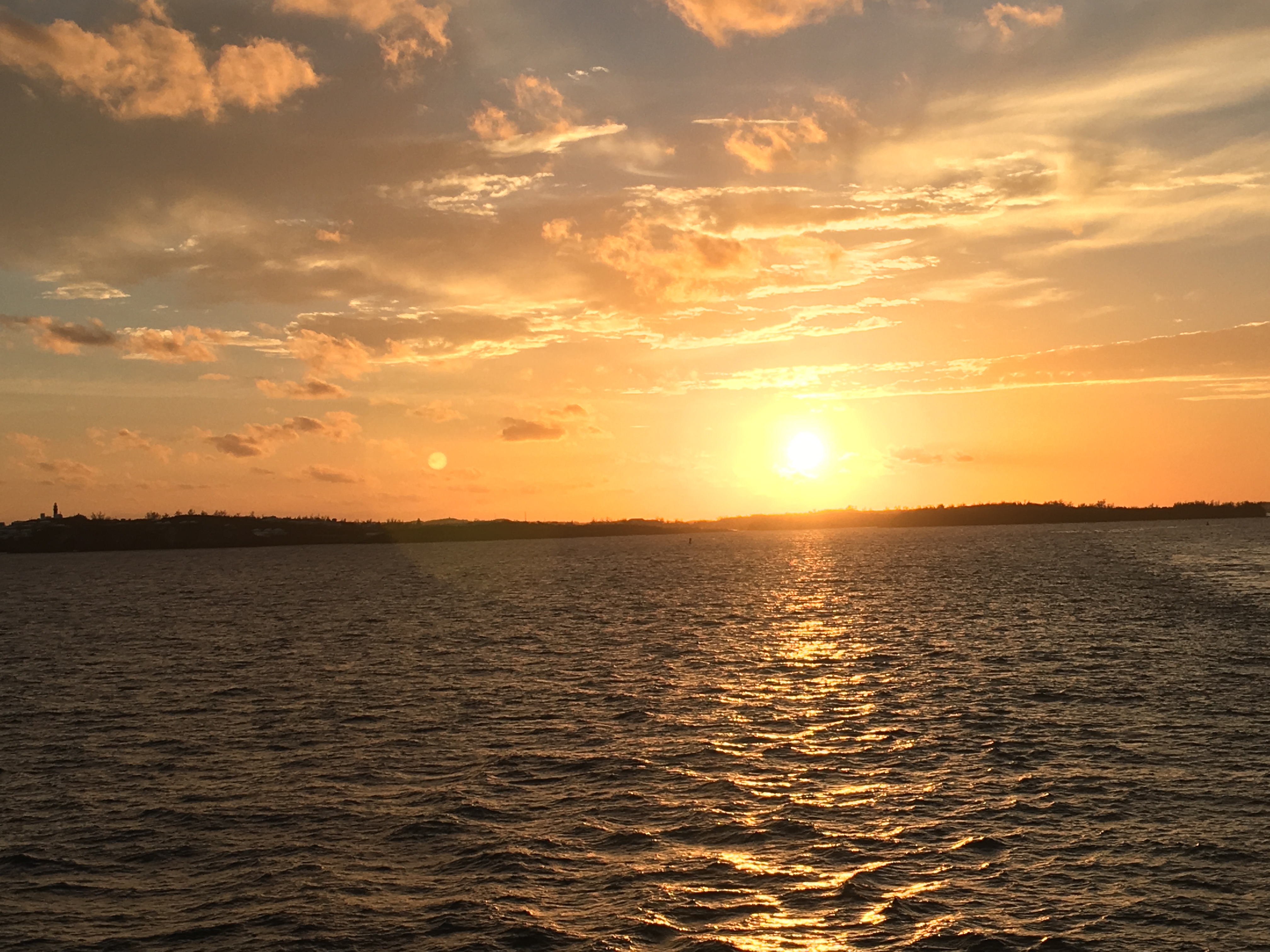
sunset over bermuda and travel
Come sail away and travel the planet… or out to the stars!

I’m listening to Styx’s Come Sail Away piece right now and it really brightened a cold, winter morning.  Not that I’m sad; quite the opposite. I just returned from two periods of extended travel to Iceland and Europe. My task: to serve as an astronomy lecturer for Smithsonian Journeys on a land trip. That was followed aa few weeks later by an assignment on a transatlantic cruise.  They were fabulous experiences. On the cruise, I had the privilege of bringing my mom along as my guest.  We had fun times, fun experiences, and  it was another chance to share the cosmos with fellow travelers.

Each time I go on a journey, I think about how much travel can broaden a person’s horizons. It doesn’t have to be very far  — many people find inspiration as they travel from one town to another, or even to another neighborhood in their own metropolis. The important thing is that when a person travels to a new environment, be it next door or around the world, they see a new vista, a distant horizon, and meet new and different people.

Travel and Exploration are How We Learn

That’s the essence of exploration – to learn new things from new places. It’s why I enjoy going around sharing astronomy and space science with others. It’s sort of a “meta” experience — reaching out to others about how we explore the universe and what we learn about it (and ourselves). That’s probably why I am so fascinated with astronomy and space exploration; they are important journeys to make, and the journey of my life has been to study astronomy and then share it with others. Each time we look up and out, we make progress toward understanding our place in the universe. each time we travel around our own planet, we make progress in understanding our brothers and sisters on this planet, and the places they live in. Progress is the greatest journey of all.


See the Schiaparelli Resting Place on Mars

High-res Image of the Schiaparelli Lander’s Final Hit Point

mars crash site for schiaparelli
Composite of the ExoMars Schiaparelli module elements seen by NASA’s Mars Reconnaissance Orbiter High Resolution Imaging Science Experiment (HiRISE) on 1 November 2016. Both the main impact site (top) and the region with the parachute and rear heatshield (bottom left) are seen in the central portion of the HiRISE imaging swath. The front heatshield (bottom right) lies outside the central colour imaging swath.
 NASA/JPL-Caltech/University of Arizona

This is a sad image, but it at least tells us more about the Schiaparelli lander’s fate. It left ExoMars last month and then catastrophically fell to the ground just moments before a planned soft landing.  You can clearly see pieces of the lander (the parachute and rear heatshield) not far from the blast where the lander crashed (and presumably its fuel tanks exploded on contact).

As I mentioned in a previous post, Mars is hard. And, there will be times when we prang a spacecraft. It’s like aviation: aircraft and pilots have problems.  In the early days, lots of problems happened. It’s important that we get Mars landings right before we send people to the Red Planet. Even then, as Gus Grissom said about spaceflight, “We are in a risky business.”

What that means is, ESA and NASA and all the others who want to go to Mars will work to get it right, but also recognize that these things can and will happen. Also as Gus said (and learned): “the conquest of space is worth the risk of life.”

I hope that the next time ESA lands one of these, all goes well and they are successful. They have a working orbiter from the ExoMars mission, and it will be gathering science for some time to come. Let’s focus on that, too, and wish them the best!

Exploring Science and the Cosmos

Spam prevention powered by Akismet